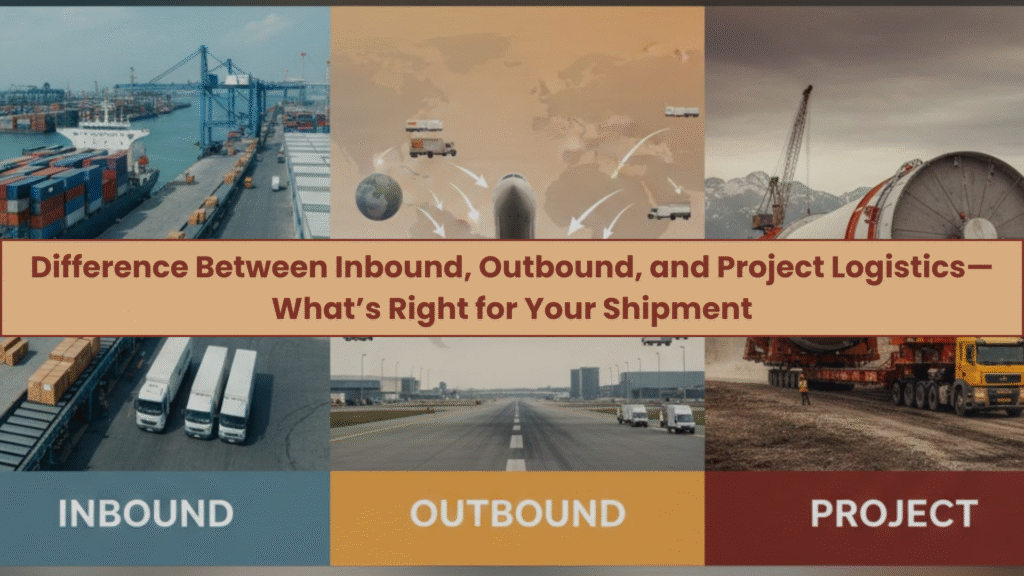
When you explore the shipment and transportation industries, you will come across terms like “inbound,” “outbound,” and so on. Do you know what each of them means? Well! If you are a newbie, you must be unaware of these terms. However, to make the most out of these shipment types, you should know these types of logistics services in India. In case you do not know where to get details, just go through this post for a better understanding.
What is inbound logistics, its key activities, and its objectives?
In the comparison of inbound vs. outbound logistics, we will explain the inbound logistics first. It is the process where acquiring and storing products, goods, and raw materials from the suppliers has been involved. It also includes the proper procurement along with the shipment of products.
Key activities
- Procurement process (finding and buying materials from the manufacturers and suppliers)
- Transportation where logistics are managed from a supplier to manufacturing to warehouse.
- Receiving goods to check quality as well as quantity.
- Storing goods safely.
- Monitoring the levels of stocks to make sure that there are adequate products to fulfill the demand.
Objectives
- The only objective of inbound logistics and shipment is to make sure that the supply process is efficient and smooth.
- In addition to this, the process aims at minimizing times and costs during assembly or production.
- In simple terms, this logistics process is focused on providing the raw materials safely that are needed for the production.
What does “outbound logistics” mean? What are its key activities and objectives?
When it comes to inbound vs. outbound logistics, the latter one includes the activities that are needed to deliver the final product to the targeted customers. It is more focused on distributing the goods to customers, distribution centers, and retailers.
Key activities
- Handling orders of the customers, along with invoicing and other aspects.
- Packaging is the key to ensuring effectiveness. This prepares your goods for transportation. Remember, packaging not only includes packing it but also documenting and labelling it.
- Choosing the right mode of transportation for the shipment to ensure prompt deliveries.
- Before the final goods are dispatched, they must be kept safely in the warehouses.
- It is crucial to effectively coordinate and communicate with customers or retailers about the distribution and delivery process.
Objectives
- It ensures on-time deliveries in a cost-effective and timely manner.
- With outbound logistics, you can maintain customer satisfaction.
- Safer deliveries are the objective of outbound logistics.
The top difference between the inbound and outbound logistics
To make an informed decision, you should understand the difference available between these two terms. Here are some pointers that will help you know these things better:
- Focus: The focus of these logistics is different. Inbound is focused on bringing raw materials to the manufacturer units. Outbound, on the other hand, is focused more on the delivery of the final goods to the targeted customers.
- Stage: In the supply chain, these logistics options have a different stage. Inbound is focused on the supply chain’s initial chain, while outbound happens at the last stage, i.e., delivery.
- Objective: Inbound logistics’ objective is to ensure raw materials reach the production line on time. The outbound one is more focused on meeting the demand of customers.
Remember that inbound vs. outbound logistics—both are necessary for the supply chain and its overall effectiveness.
How to improve these logistics services?
Improving these logistics types generally includes utilizing different tools and technologies to enhance accuracy, streamline processes, and have better efficiency. Look at the following for more details:
- Using mobile computers and other wearable items can help you acquire accurate details regarding the ways to enhance speed and accuracy. It reduces manual errors. Along with this, you can opt for new-age tools to pick, pack, and ship goods timely.
- To know the real-time inventory and visibility-related details, you can have RFID tags or readers to improve tracking and reduce human errors. The same technologies can also be used to track the ODC consignment’s location. This is helpful in improving route planning and load-related details.
- For a faster process, you should use the scanners. It will swiftly scan barcodes to make the inbound logistics better. Further, you can print labels and document them properly to have them correctly documented and labeled, and the chances of shipping and related errors are reduced.
Final thoughts
For both logistics, you should go for the location tracking and other tools to ensure the right location data for important adjustments. To find out more about inbound, outbound, and want-to-be project logistics explained, you can connect with BSA Logistics. It is a popular and highly preferred option for shipping and other services. To check more, you should browse through the official ITS website. You can also connect with them via phone calls for professional assistance.